From our sites
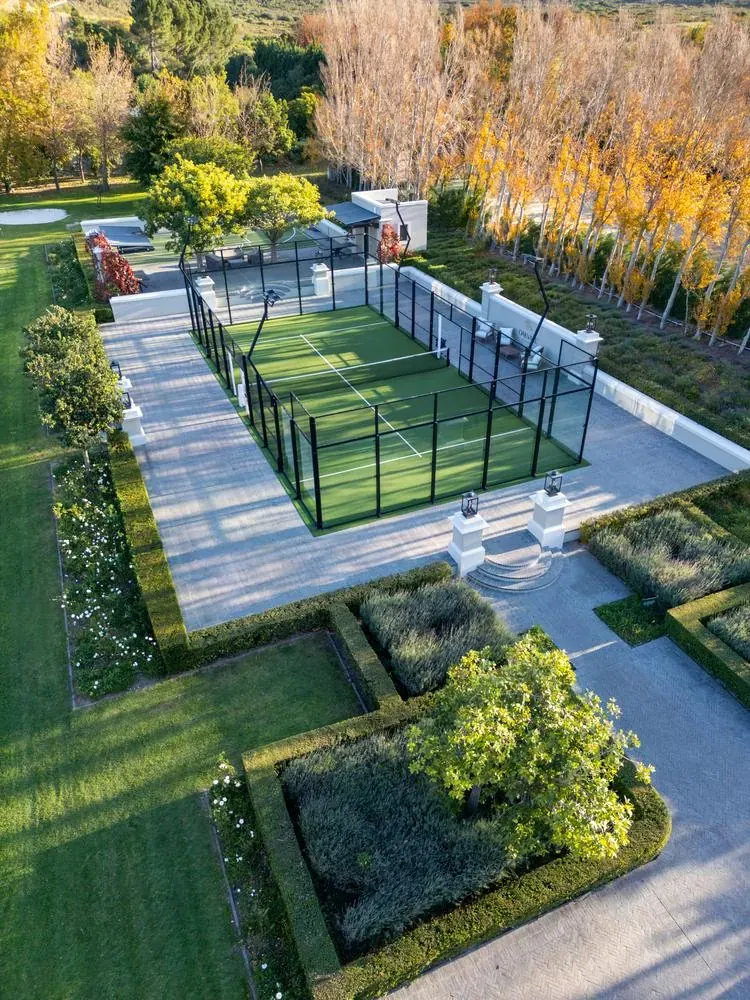
Water delivered where the design needs it
Efficient systems that support plant health while optimising water usage, tailored to each site's conditions. In a winter-rainfall region with a hot, dry summer and an unreliable grid, irrigation is a design discipline rather than a piece of shopping.
Irrigation design matches a water source to a planting design, through a system that delivers the right volume to the right root zone at the right time, without waste and without depending on anyone remembering to do it.
It covers the source and its treatment, pumping and pressure, mainline and lateral sizing, zoning, emitter selection, control, monitoring, and the seasonal regime that runs it.
Plants with different water requirements do not belong on the same valve. If they share one, the system is set to satisfy the thirstiest plant and everything else is overwatered — wasting water, encouraging disease, and producing soft growth that fails in the first hot week.
We group planting by water demand, aspect and root depth at design stage, so zones follow the planting logic rather than the pipe route. Lawn, beds, containers, screening and establishment areas each get their own control.
Borehole water in this region varies considerably. Iron will stain paving and block emitters, salinity affects what can be planted, and sediment destroys valves. We would rather know the chemistry before choosing the filtration than diagnose it from a stained wall.
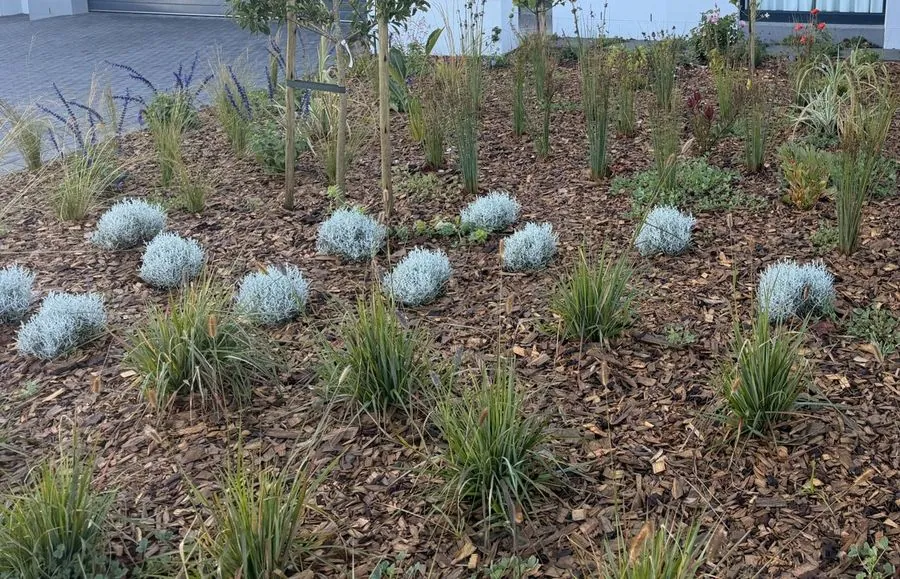
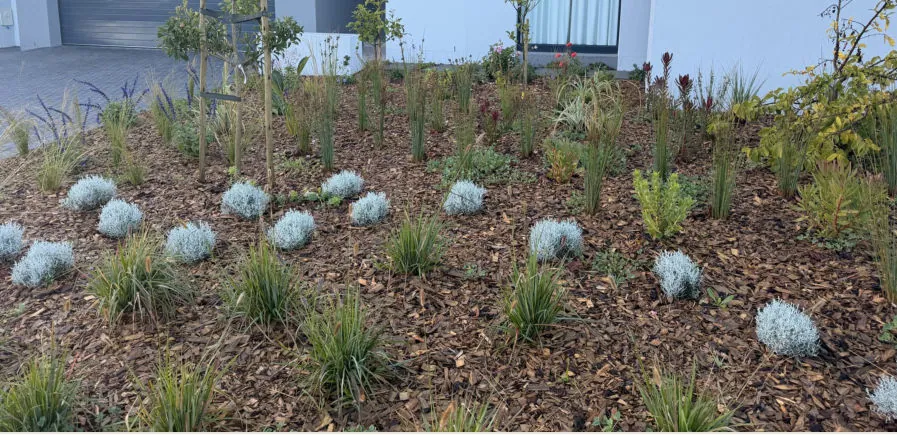
Beds are irrigated with pressure-compensating dripline laid under mulch, which puts water into the root zone and not into the air. Pressure compensation matters on sloping Winelands sites, where one line can run through a substantial change in level. Where overhead irrigation is genuinely appropriate, we use matched-precipitation rotary nozzles and set run times against the actual application rate rather than a default.
The Cape is a winter-rainfall region, so the irrigation year runs roughly opposite to most of the country: hardest work from spring through autumn, very little in the wet months. A system left on a summer programme through July does real harm. We specify weather-responsive scheduling, a rain sensor as a minimum, and a written seasonal regime so whoever looks after the garden knows what to change and when.
A flow sensor with a master valve turns a burst lateral from a week of loss into an alert and an automatic shut-off. On any system of scale it pays for itself on the first failure.
A borehole changes the economics of a large garden, and it comes with obligations. Groundwater use is regulated under the National Water Act: use must be registered with the Department of Water and Sanitation, use above the general authorisation thresholds requires a water use licence, and many municipalities separately require registration of the borehole itself. We flag this at the outset, because a garden designed around a source you are not authorised to use is a serious problem. We also design to the yield the borehole actually tests at, with storage as a buffer so the pump is not the system’s only lung.
Greywater can carry a meaningful share of garden demand, within limits. It must be delivered sub-surface, not sprayed, and not stored — untreated greywater turns septic quickly. Plumbing must comply with the national standards and be signed off, and planting has to account for the detergent load. It suits tree and shrub areas; it is a poor match for fine planting and lawn.
Rainwater harvesting is worth doing where roof area and tank space allow, both for supply and because stored soft water suits plants better than treated supply. On estates, dams and farm water rights are usually the primary source, and the system is designed around their pressure and availability.
An irrigation system that stops during load-shedding fails in the exact week it matters. We treat interruption as a normal operating condition:
An irrigation layout and specification, zoning schedule, hydraulic calculations, as-built drawings, a programmed controller, a written seasonal regime, and a commissioning walk-through so you know what every zone does.
Irrigation is designed with the planting, and sleeved and installed before surfaces are laid. Retrofitting into a finished garden costs more and delivers less.
Yes, starting with an audit: zone by zone, checking coverage, pressure, uniformity and controller programming. Most established systems have drifted, and the corrections are often cheap.
Usually, and often substantially, because most existing gardens water the wrong things at the wrong rate rather than watering too little. Hydrozoning and correct run times do more than any single product.
They earn their place on larger or more varied gardens, and where nobody is present daily. On a small, simple garden a well-programmed conventional controller with a rain sensor is often better value.
From our sites
Start a project