From our sites
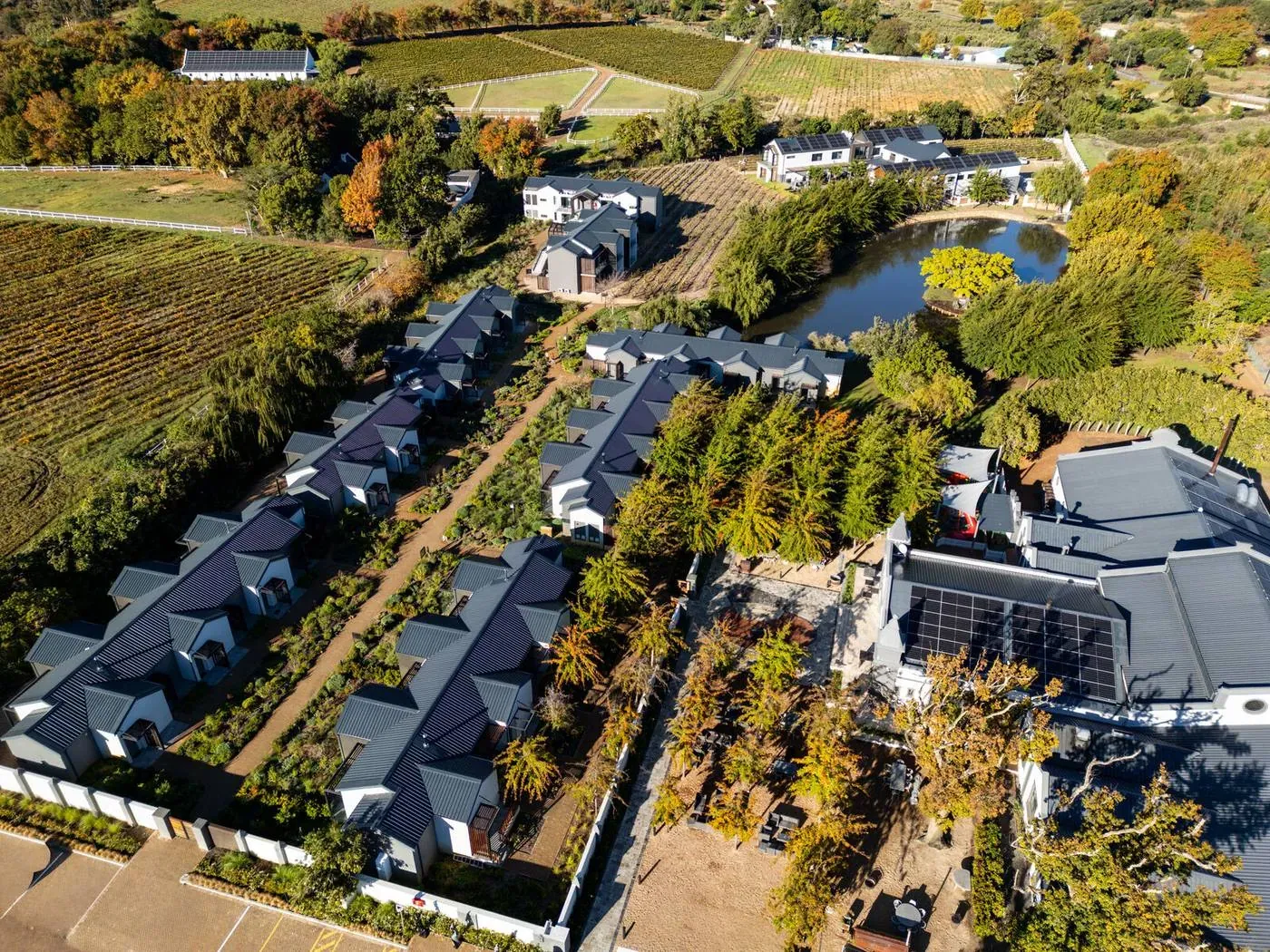
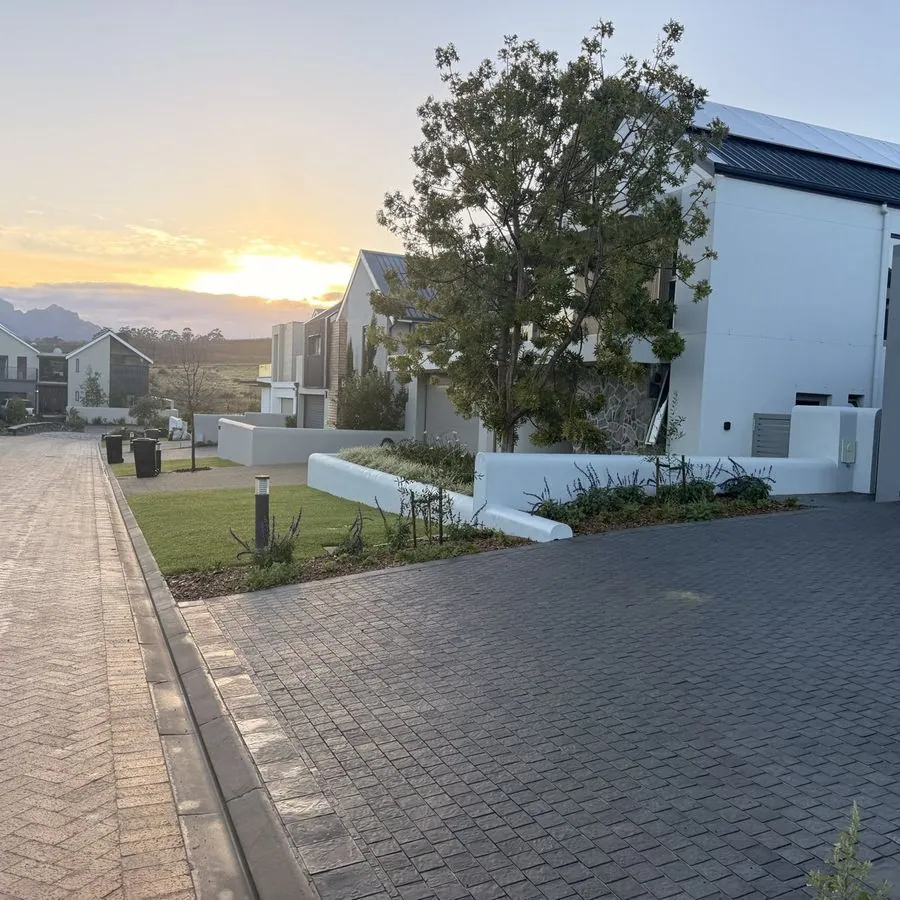
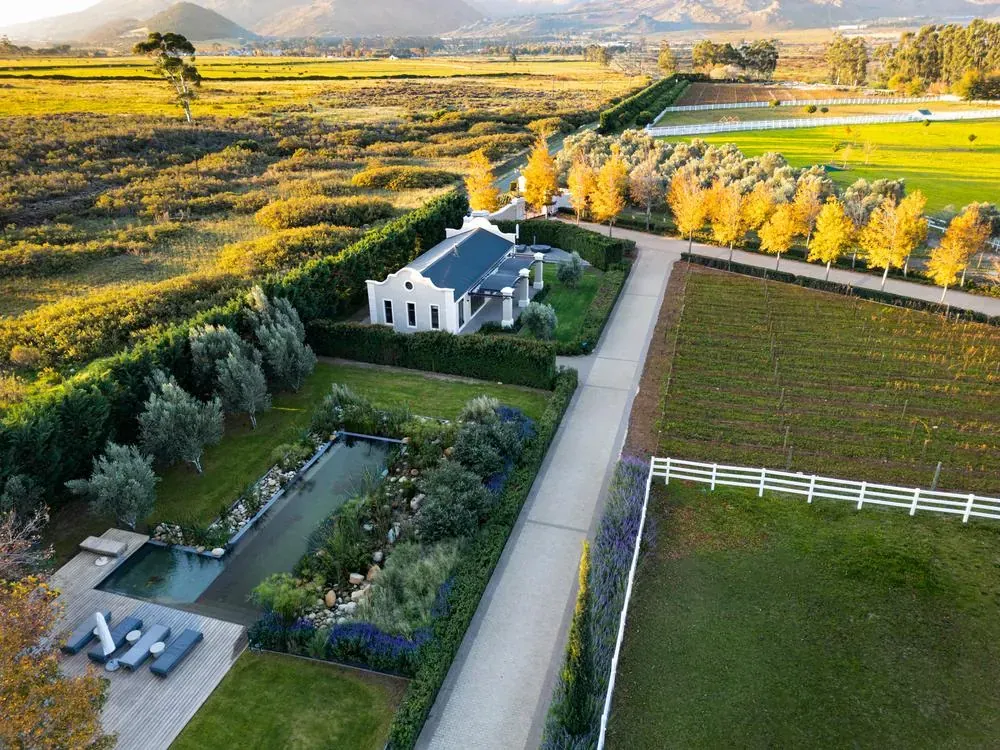
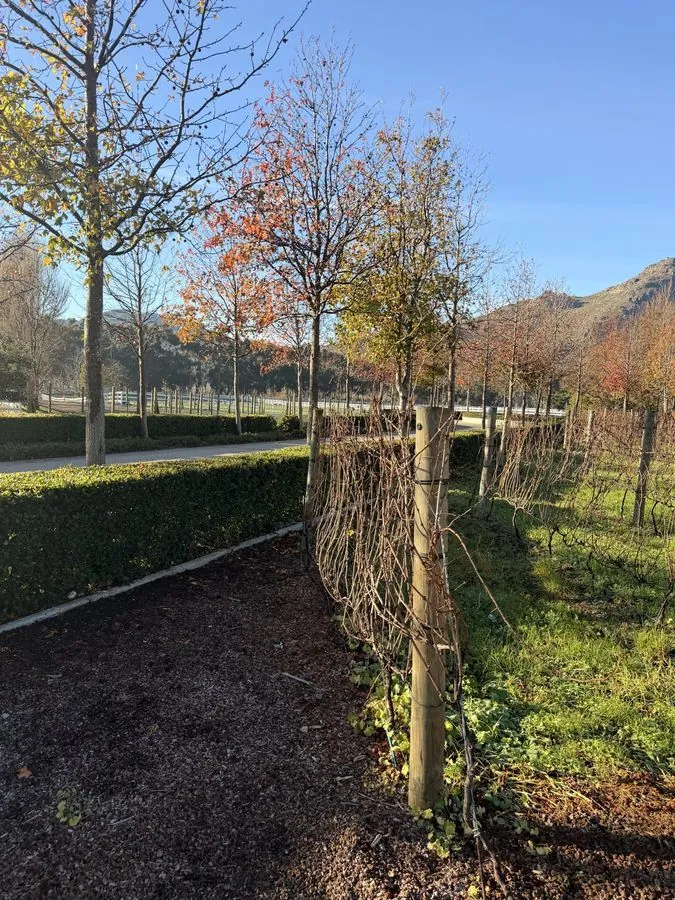
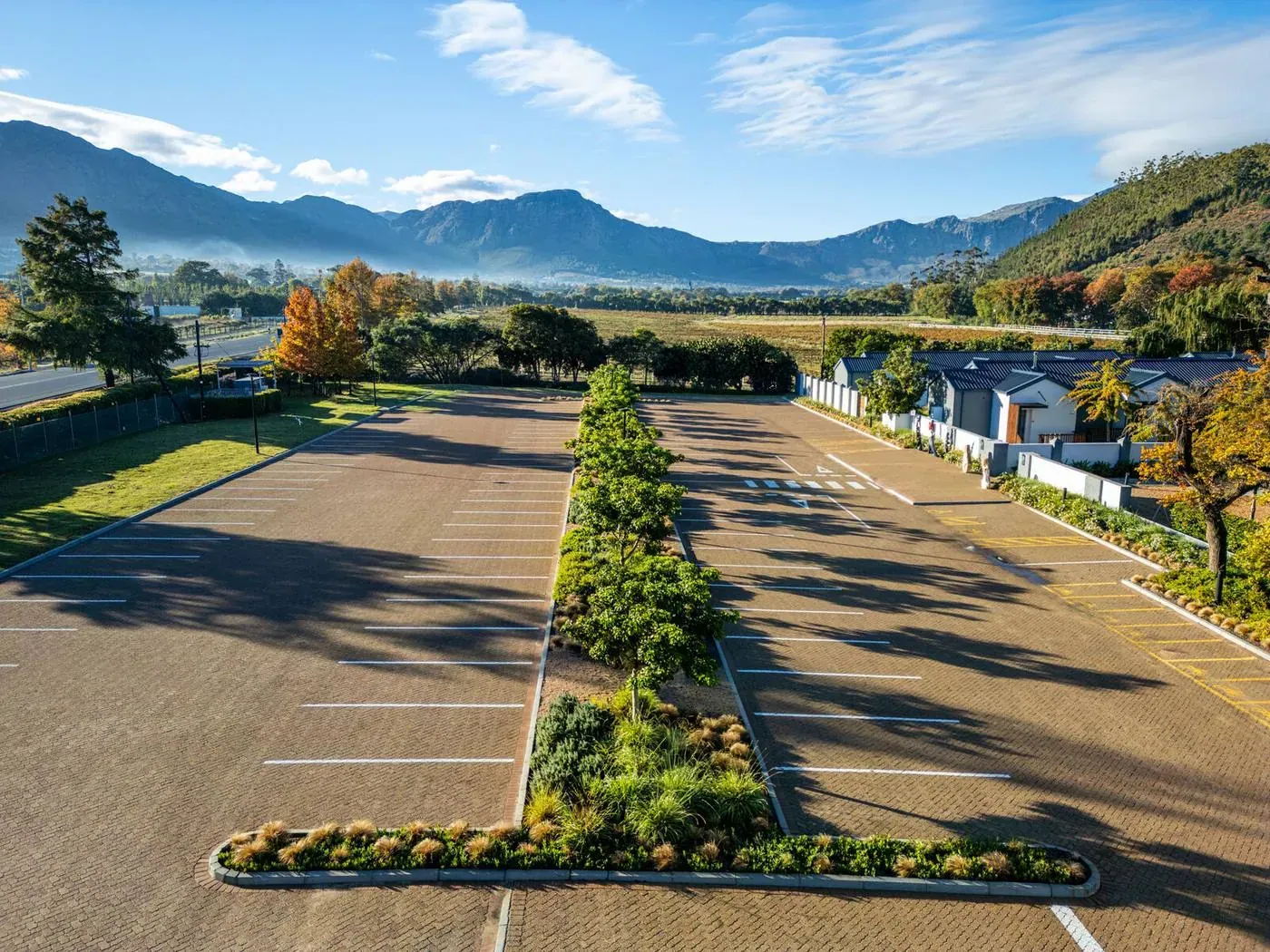
Master planning and phased implementation
Larger-scale master planning and phased implementation for estates, wine farms and lifestyle developments. At this scale the landscape is not a garden with a bigger boundary. It is a system of land uses that has to be organised, staged and funded over years.
Estate landscaping is the planning and delivery of the whole property: arrival and avenues, roads and verges, the settings of buildings, gardens and courtyards, water, planting at the landscape scale, invasive clearing, rehabilitation, fire management and the phased programme that ties it together.
The distinction from garden design is real. A garden is composed. An estate is organised — and then composed where composition is appropriate.
Before any work is committed we establish the structure of the property: how you arrive, where the working functions live, which views are assets and which need screening, how water moves and where it is stored, what the vegetation is doing, and what the property is for in ten years.
Everything after that is an implementation decision. Estates that develop without a master plan accumulate good individual projects that do not add up, and reconciling them later always costs more than the plan would have.
We break implementation into phases that each complete — each leaves the property looking finished rather than paused. Phasing is set against the client’s funding pattern, the agricultural calendar where the property is working, and the planting seasons, since establishing a large area at the wrong time of year buys a poor result at full price.
Infrastructure that is expensive to retrofit — mainline irrigation, ducting, road base, drainage — goes in early, even where the visible work above it comes later.
On a wine farm, harvest is not negotiable. Nor is spraying, vehicle access to blocks, or the movement of farm staff. We programme around the operation and coordinate directly with the farm manager. A landscape contractor who blocks a road during harvest will not be invited back.
The Cape’s fire risk is not theoretical. Landowners carry duties around firebreaks and, in most of this region, membership of a fire protection association. Beyond compliance, planting design either helps or hurts: defensible space around structures, species selection that avoids the most flammable material close to buildings, breaks in the continuity of fuel, and access maintained for firefighting vehicles. We design this in rather than adding it as a note.
Listed invasive species carry statutory control duties for landowners, and on most Cape properties the problem concentrates along watercourses and disturbed edges. Clearing is planned as a programme with follow-up built in, because a single clearing operation without follow-up is money spent on a two-year reprieve. Rehabilitation planting goes in immediately behind clearing, since bare ground in a Cape summer re-invades faster than it regenerates.
Sources, storage, rights, pumping, distribution and losses are addressed as one system. On a large property, the difference between a system designed as a whole and one grown by extension is very large, and it shows up every month on the pump’s power consumption.
The master plan should come before the first building is sited, if possible. Where it comes later — as it usually does — it still pays for itself by preventing the next ten decisions from being made in isolation.
Implementation then runs in phases over years, with the plan reviewed as the property’s use develops.
Longer than a garden design, and the survey and information-gathering stage is a substantial part of it. On a working farm we would also want to see the property in more than one season before we commit to a water and planting strategy.
No. The plan is the commitment; the implementation is decided phase by phase. Many clients build one phase, live with it, and adjust the next.
Yes, and it is usually the better outcome. Farm staff know the property, and the long-term maintenance is going to be theirs. We are glad to train and supervise rather than displace.
They still need a position. Leaving land undefined is how invasives, erosion and fire risk arrive. Often the correct answer is a low-intervention management regime rather than a landscape project.
From our sites
Start a project