Kitchen Gardens · Cape Winelands
From Landscape
to Harvest
Herb, vegetable and fruit gardens designed to be eaten, experienced and continually renewed.
Kitchen Gardens
A garden that feeds the table.
A kitchen garden should earn its place in the landscape twice: once for how it looks, and again every time someone walks to it with a basket. We design productive gardens into the whole landscape, so the beds, arches and orchards feel as considered as the paving and planting around them.
Built to keep producing. Many food gardens fade once the installer leaves. Ours are built on living soil, planted in layers and handed to a garden team we have trained while we build, so the harvest carries on season after season.
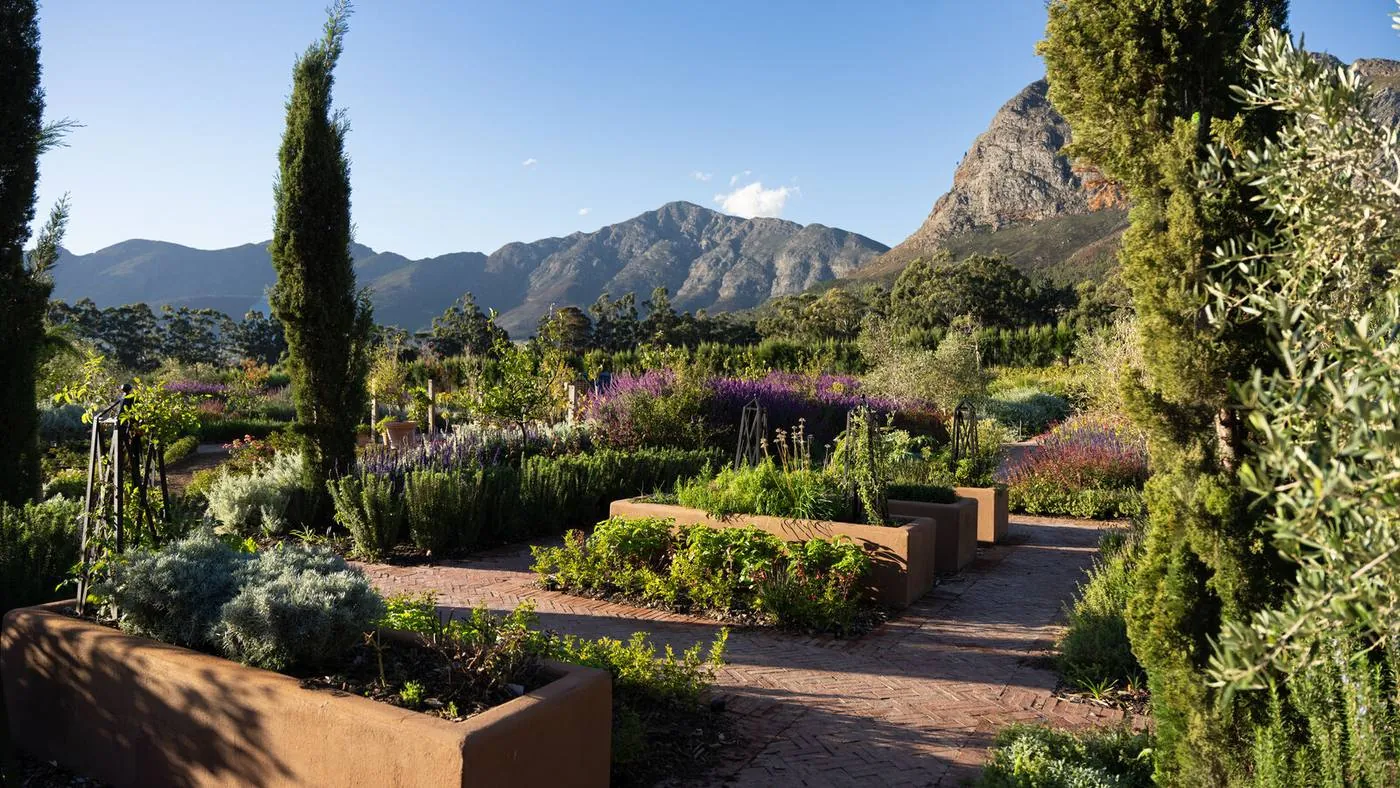
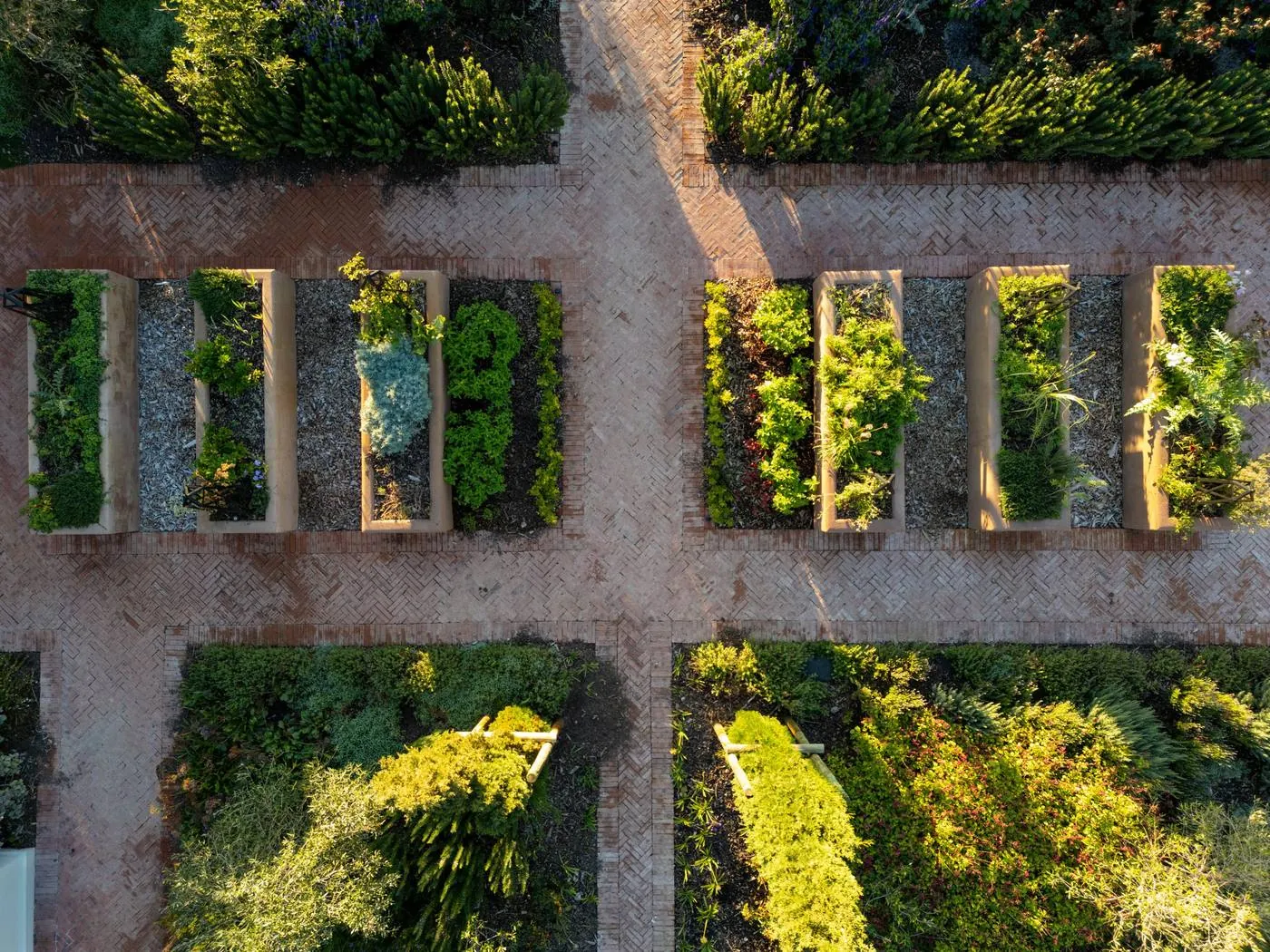
Raised beds designed into the garden at Val du Lac, Franschhoek ·
01
Living Soil
Compost, biochar and soil biology do the work that chemicals usually do, so the soil improves season after season.
02
Heritage Crops
Black tomatoes, striped beetroot, rainbow carrots and Romanesco spirals grow beside reliable kitchen staples and culinary herbs.
03
Training by Doing
Your team learns the garden while we build it: soil, sowing, planting, harvest and reset.
What We Create
Four ways to grow
From a few beds of herbs by the kitchen to a working estate garden that supplies the restaurant. Every garden can carry on with Seasonal Stewardship, so the relationship lasts as long as the garden does.
01
The Herb Garden
For homes, and a first taste for our existing clients
Fresh herbs and edible flowers at the kitchen door.
One to three beds or planters by the kitchen, built on living soil and planted with culinary herbs and edible flowers. Finished with a hands-on handover session.
02
The Kitchen Garden
For family homes and estates
A family potager designed into your garden.
Four to twelve beds woven into the landscape: a soil rebuild, drip zones grouped by water need, protection where it is needed and heritage planting. Two training sessions and visits through the first season.
03
The Estate & Chef’s Garden
For wine estates, lodges, restaurants and venues
A working garden for your kitchen and your guests.
A bed-by-bed plan built with your chef, a propagation programme, your staff trained while we build, a named garden champion, and harvest experiences for guests and children.
04
Seasonal Stewardship
For every garden we install
We return every season to plan, replant and refine.
Seasonal visits for succession planning, replanting, soil feeding and problem-solving, with coaching for your garden team, so the garden keeps getting better.
Add to Any Garden
Orchards and fruit-tree guildsFruit trees, vines and granadilla, with herbs and flowers planted beneath.
The chicken and compost cycleSeed, greens, chickens, compost, soil and food, designed as one loop.
Protection that looks designedHinged mesh bed covers and walk-through growing arches.
Plants from our nurseryHeritage seedlings and specialist edibles, grown for each garden.
Seed librarySeed saved from our gardens, dried, bottled and named for you.
Growing programmesSchool and corporate gardens: hands-on growing, CSR and team building.
Every garden is priced from our rate card once we have seen the site and agreed what you want to grow.
How It Works
From first visit to first harvest
Seven steps take a site to a garden your own team can run. Steps one to six are a single project; step seven is the relationship that keeps it producing.
Read the site
Light, water, soil, wind and access, who will look after the garden, and what the kitchen actually uses.
Design it into the landscape
A bed-by-bed plan: main crop, companions, water group, sowing method, succession and next crop.
Build living soil
Mature compost, inoculated biochar, worm castings and mulch. We improve only what needs improving, then let it settle for about two weeks before planting.
Propagate and plant in layers
Heritage seed raised in our nursery ahead of time, then planted in layers: main crop, herbs, flowers, climbers, perennials and quick succession crops.
Train while we work
Soil day, planting day, direct-sow day and a harvest with the kitchen. Your team learns on the job, not in a classroom, and one person becomes the garden champion.
Establish and adjust
We follow the garden through its first weeks, fixing stress, gaps, irrigation and timing.
Steward the seasons
Your team owns the daily rhythm. We plan each season’s crops, rotations and soil feeding, and refine what the kitchen uses most.
What We Grow
Familiar enough to eat. Unusual enough to inspire curiosity.
Kitchen use comes first. The surprising crops make the stories, the photographs and the children’s harvests.
TomatoesSungold, Brown Sugar, striped and black heritage types
RootsChioggia and Golden Globe beetroot, rainbow and Cosmic Purple carrots, Spanish Black radish
GreensGourmet lettuce, rainbow chard, Romanesco broccoli and cauliflower
Vines and fruiting cropsLemon and Painted Serpent cucumbers, mini pumpkins, heritage melons
PotatoesPink Fir Fingerling and Alverstone Russet
HerbsBasil, parsley, thyme, oregano, sage, rosemary, bronze fennel, tarragon and sorrel
Edible flowersNasturtium, calendula, borage, cornflower and marigold
PerennialsArtichokes, asparagus, fruit trees, grapes and granadilla
Common Questions
Do I need a big garden?
No. A herb garden can be one bed or a few planters by the kitchen.
Our garden team has never grown food. Is that a problem?
No. We train them on the job while the garden goes in, and keep coaching them each season.
What about water?
Beds are grouped by water need on drip irrigation and mulched heavily to hold moisture.
Peacocks, porcupines, moles?
We design protection into the garden, such as hinged mesh covers and walk-through arches, so it looks intentional.
Can you work with our chef?
Yes. On estate and restaurant gardens the planting plan starts with the menu.
When is the best time to start?
Spring, from August to October, is planting season. Winter is when we design next spring’s gardens, so the design can start at any time of year.
Where do you work?
Across the Cape Winelands, including Franschhoek, Paarl, Stellenbosch and Klapmuts.
Start Growing