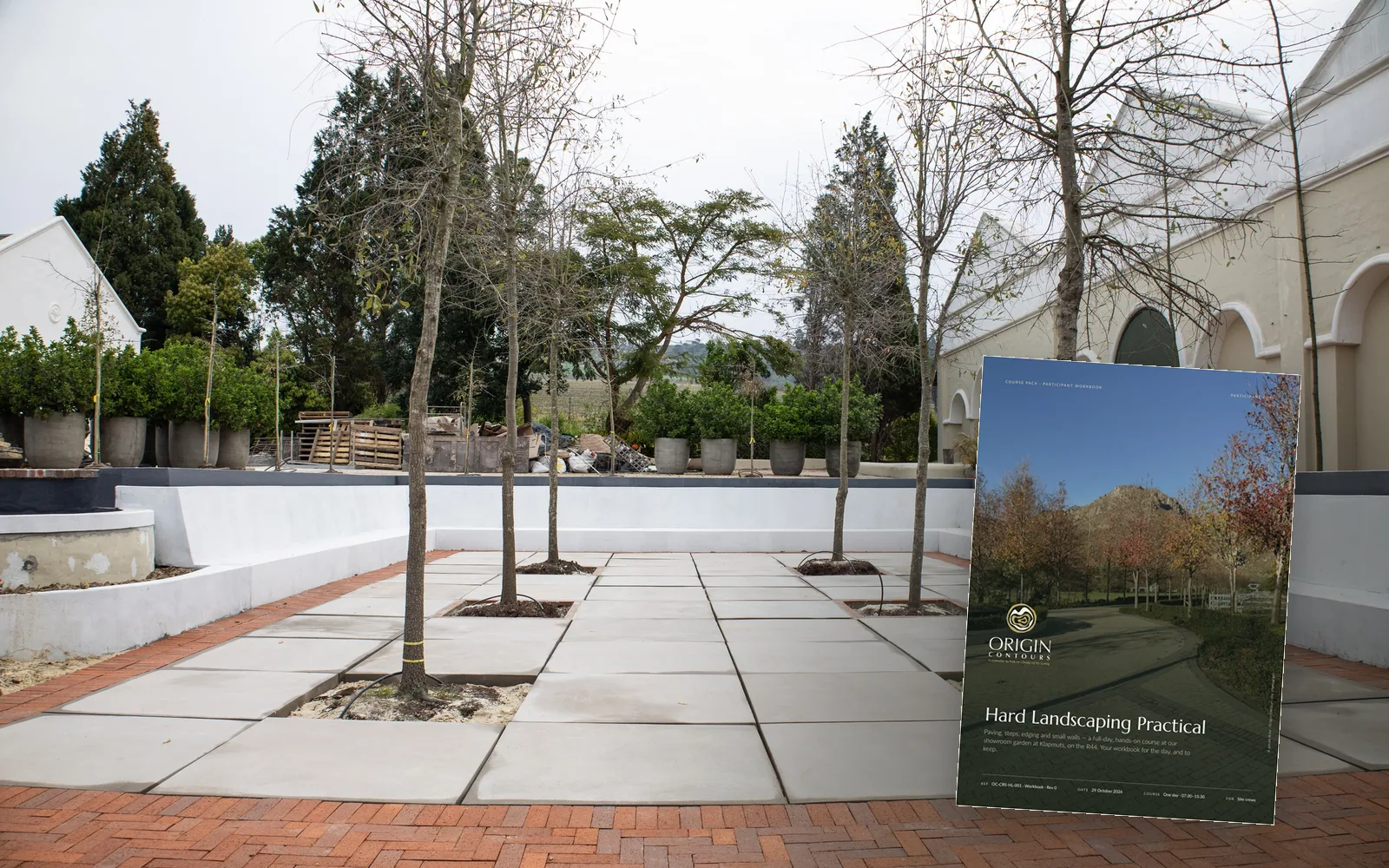
Look inside
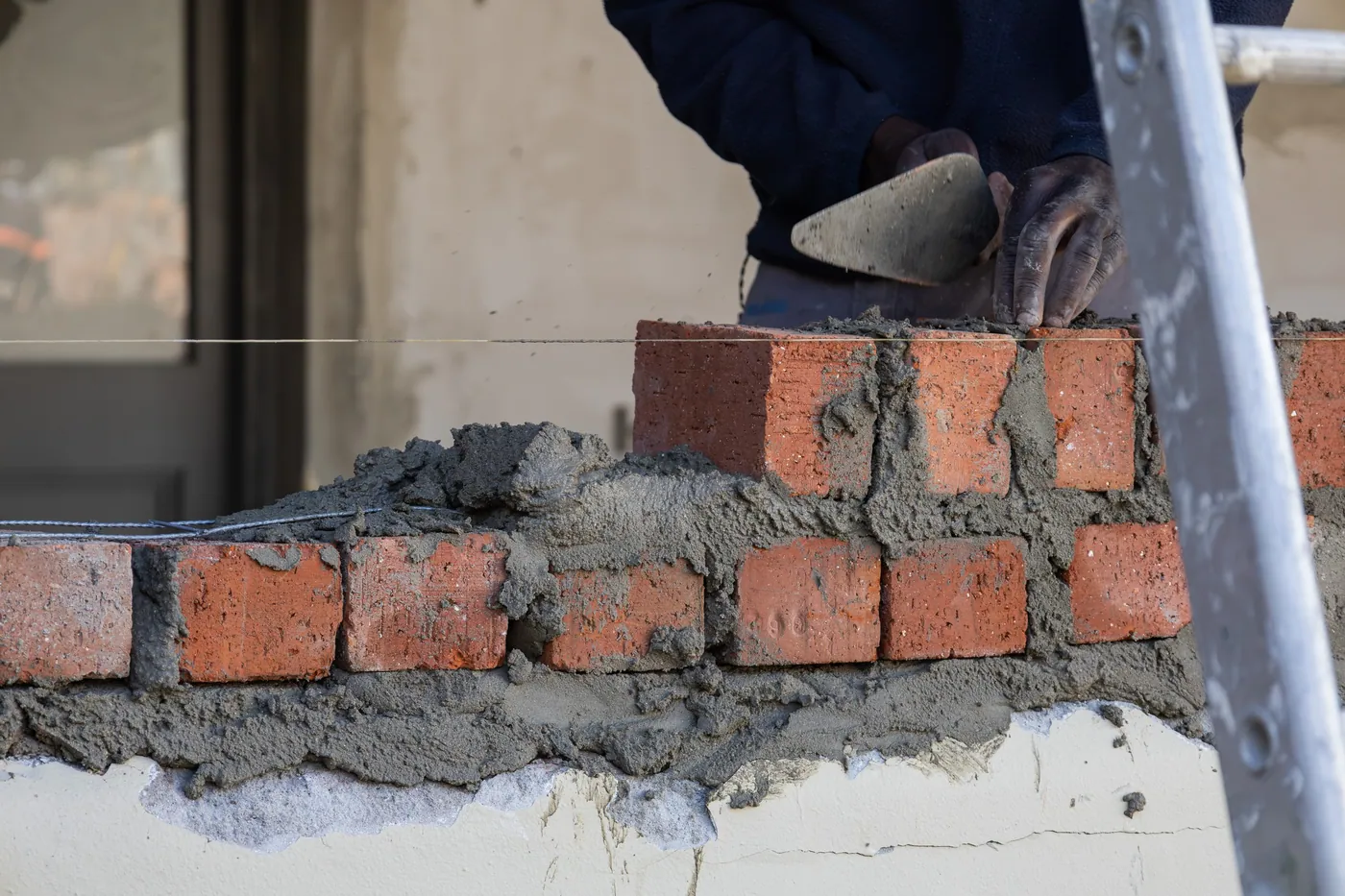
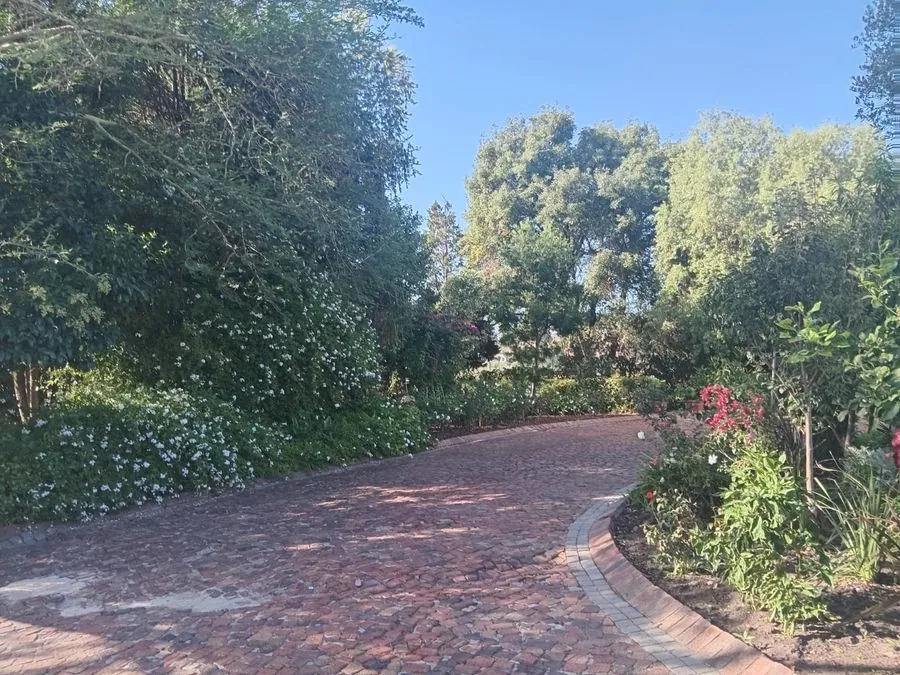
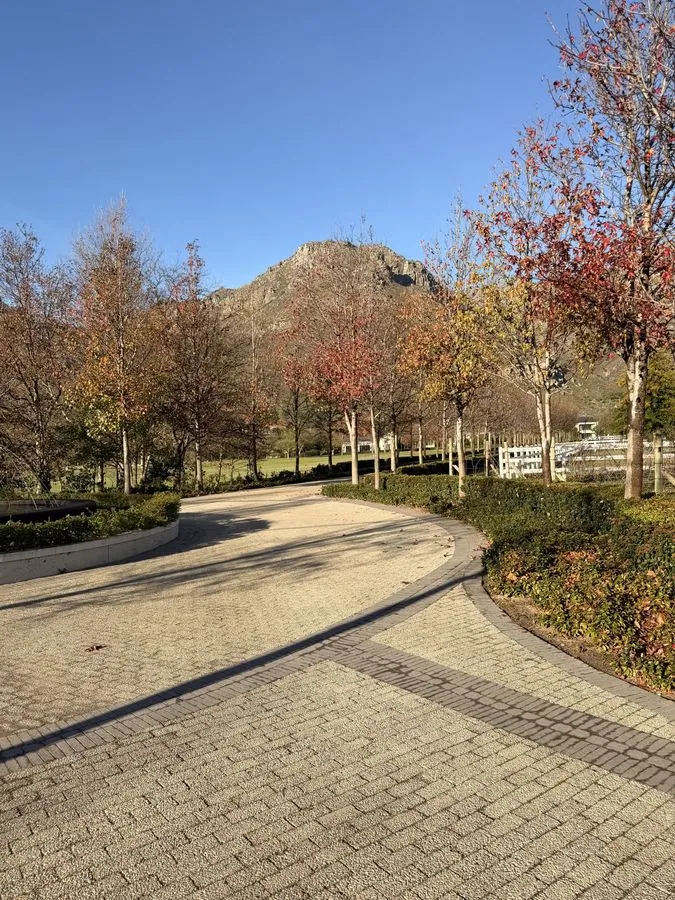
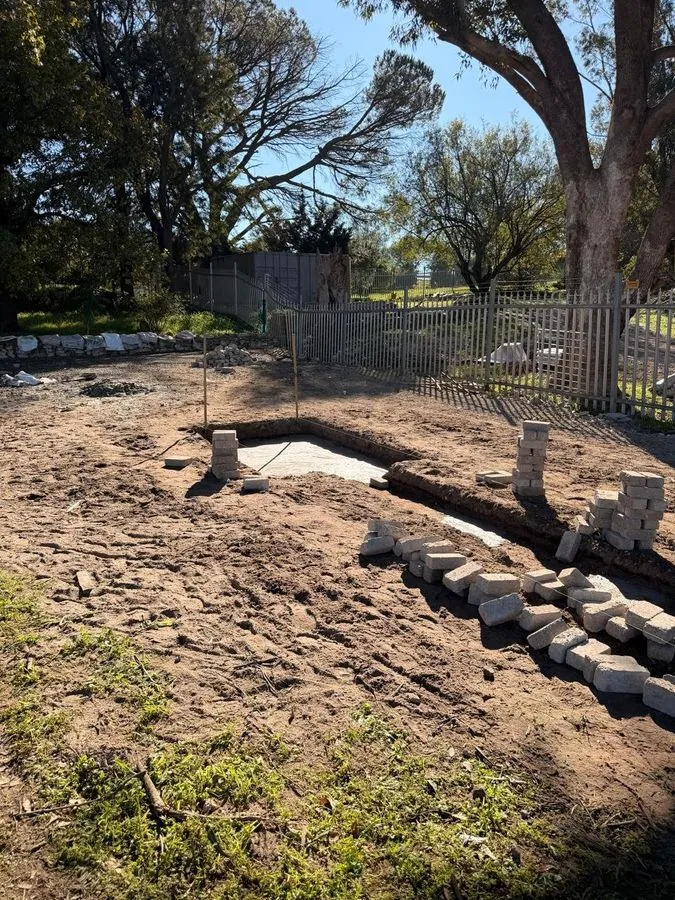
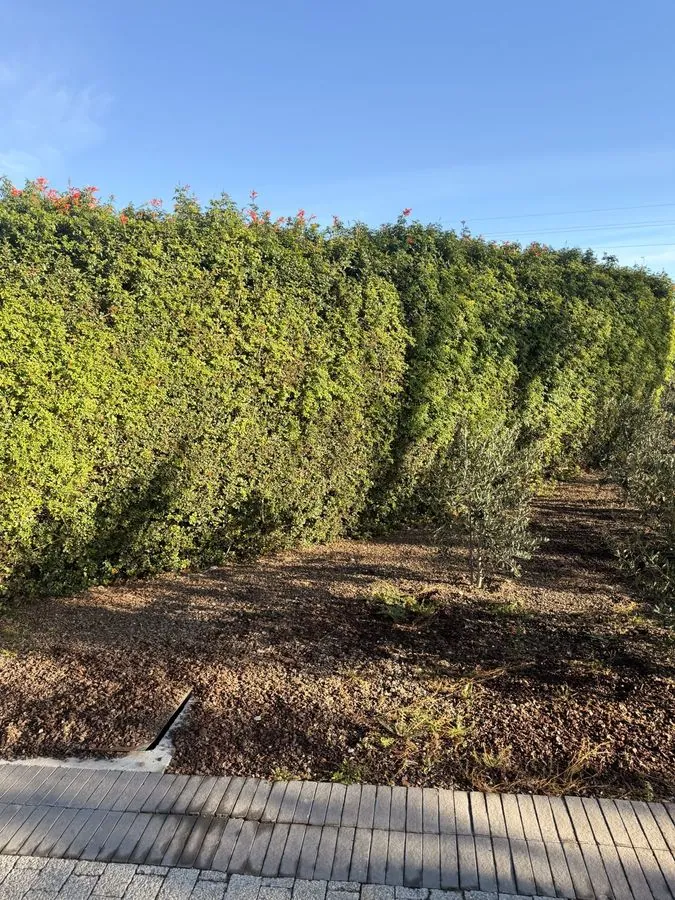
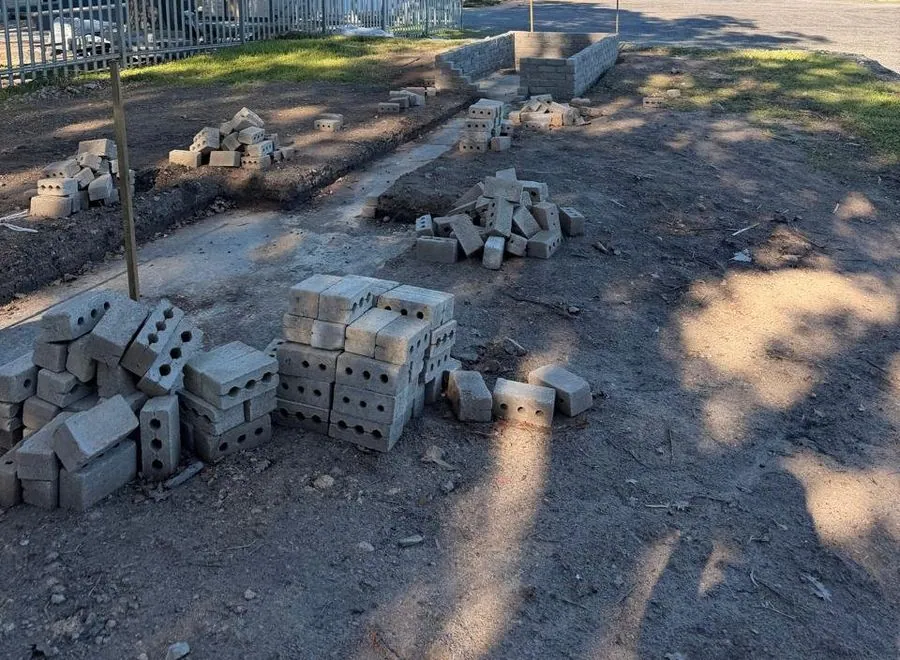





5 preview pages and 6 photos. Tap any picture to see it larger. Previews show the top of each page.
A full day on paving, steps, edging and small walls: base preparation, levels, joints and finishing.
A full, hands-on day in the training yard at our showroom garden. In teams of five you build a paving panel from the subgrade up: you set it out square off a fixed line, take the levels from a datum and the DPC, lay and plate-compact a G5 base to a 1:60 fall, set a soldier-course edge in concrete after the levels hold point, screed the sand and lay, cut and joint the pavers. Beside it you build a two-riser step and fill a gabion basket. You finish by inspecting the other team’s work against our tolerances, a short written check (oral answers accepted) and a certificate.
When and where
Full day, 07:30 to 15:30. Our showroom garden at Klapmuts, on the R44: De Wilger Farm, c/o N1 & R44, Klapmuts. Map. Up to 10 people.
On the day
| 07:30–07:50 | Arrival and PPE Sign-in and consent; PPE issued and fitted; boots checked |
| 07:50–08:15 | Safety briefing The day; the plate compactor and the wet saw; silica dust, cement and lime; lifting; sun; the stop rules |
| 08:15–08:45 | Session 1 · Build-ups, levels and falls The drawing of the bay; the paving sandwich; the DPC rule; falls with a straight edge and a packer; the instrument and staff |
| 08:45–10:00 | Session 2 · Set out, strings and boards Square the panel off the fixed line; the diagonals; corner levels; strings at finished level; timber edging and the step’s first boards |
| 10:00–10:15 | Tea Hands washed; water refilled; sunscreen again |
| 10:15–11:15 | Session 3 · The base G5 in layers, damp, plate-compacted to the falls; the step’s first lift; the gabion bed |
| 11:15–12:00 | Session 4 · Edges and concrete The levels hold point; concrete mixed on a board; the soldier course set and haunched; the step’s second boards; the gabion basket |
| 12:00–12:45 | Lunch In the shade; hands washed first |
| 12:45–14:00 | Session 5 · Bed, lay and cut Screed the sand; lay from the fixed edge; joints and rows; cuts at the wet-cut station; the step treads; the gabion filled |
| 14:00–14:15 | Tea Water and shade |
| 14:15–14:45 | Session 6 · Joint, compact, check Joint sand and the plate; each team inspects the other team’s bay against our tolerances |
| 14:45–15:05 | Written check Fifteen questions; oral answers accepted |
| 15:05–15:30 | Wrap-up Results, certificates and feedback; the bays left safe. We close at 15:30 |
What you will be able to do
- Read a paving, step and wall build-up from a drawing, and work out the box-out depth and the levels from a datum and the DPC.
- Set out a panel square off a fixed line with a 3-4-5 and prove it with the diagonals; set strings and profiles to finished level with a fall and a cross-fall.
- Check a fall with a straight edge and a packer, and read a level with an instrument and staff.
- Set timber edging and a soldier-course edge restraint to a string and level, haunched in concrete, after the levels hold point.
- Lay and compact a G5 base in layers with a plate compactor, used safely, and screed a river-sand bed to 30 mm.
- Lay pavers from a fixed edge with 2–3 mm joints and straight rows, plan the cuts so no piece is under a third, and joint and compact the panel.
- Work out and build garden steps — equal risers, 2R + T = 600–650 mm, treads falling forward — and build a low gabion wall on a level bed.
- Inspect finished hard landscape against our tolerances: the straight edge, the lip, the falls, the risers and the water test.
- Work safely all day: lifting, the plate and the saw, silica dust, cement and lime, noise, sun and water.
Bring
- Safety boots, long trousers and a shirt with sleeves
- A hat with a brim and a water bottle to refill
- Reading glasses if you use them
We provide
- All the PPE — work gloves, chemical-resistant gloves and goggles for the concrete, safety glasses, hearing protection, dust masks, knee pads and hi-vis
- Sunscreen, drinking water, tea and lunch
- Every tool, machine and material
- The participant workbook, yours to keep
- The assessment and a numbered certificate
Certificate
Everyone who completes the course gets a certificate of completion. Those who pass the practical checklist and the short check get one that says assessed competent. Our certificates are not accredited qualifications.
Questions
- Do I need to have laid paving before?
- No. The day starts at the drawing and the subgrade. People who already lay paving go further: the levels, the falls and the inspection are the point.
- Will I use the plate compactor and the saw?
- You run the plate compactor for one supervised turn, after the pre-use check — as training, not permission to run one on site. The wet saw is run by the co-facilitator; only participants whose employer confirms saw training make cuts, one-to-one. Everyone marks and checks the cuts.
- How am I assessed?
- An assessor watches you at your bay all day against twelve points, and you inspect the other team’s bay against our tolerances. There is also a fifteen-question written check; 11 of 15 passes, and answers may be given aloud.
- What certificate do I get?
- A numbered certificate of completion — “completed and assessed competent”, or “completed (attendance)” if you are not yet competent. It is not an accredited qualification and carries no SAQA or QCTO credits.
- What happens in bad weather?
- Lightning, high heat or high wind stops the course; we tell you by 06:30 on the day and set a new date. We run this course from April to October.
- Can my employer book several of us?
- Yes, up to ten on one date. Where an employer books, the employer receives the results.
Can't come? Up to 14 days before: a full refund. 7 to 13 days: move to another date, or half back. Less than 7 days: send someone else in your place. See the terms.
Who it is for
For site crews on landscape build jobs, new and experienced. No experience is needed. The day is physical: lifting within 25 kg, kneeling, digging and working outdoors from 07:30 to 15:30. If reading is hard for you, the facilitator reads the key text aloud and the written check can be answered aloud. If you have been trained on a cut-off saw at work, ask your employer to tell us; only trained participants make cuts.
Licence
One seat for one person on the date you choose. Add or change the names on your booking page any time before the day.
Sold by Origin Design Workshop (Pty) Ltd as part of Origin Contours Academy. Terms, licences and refunds.